Welcome to Bryce Canyon National Park: A strange but beautiful maze of Flame and Stone.
If the earth could dream, Bryce Canyon National Park would be its most surreal vision. It is a jagged fantasia of crimson spires, silent amphitheaters, and light that bends like magic. Tucked into the high plateaus of southern Utah, Bryce isn’t technically a canyon at all, but rather a series of natural amphitheaters carved over eons into the Paunsaugunt Plateau by frost, water, and time. What remains is a forest of stone that seems impossibly alive. All parts seem to jut, lean, and loom like fiery guardians frozen mid-dance.
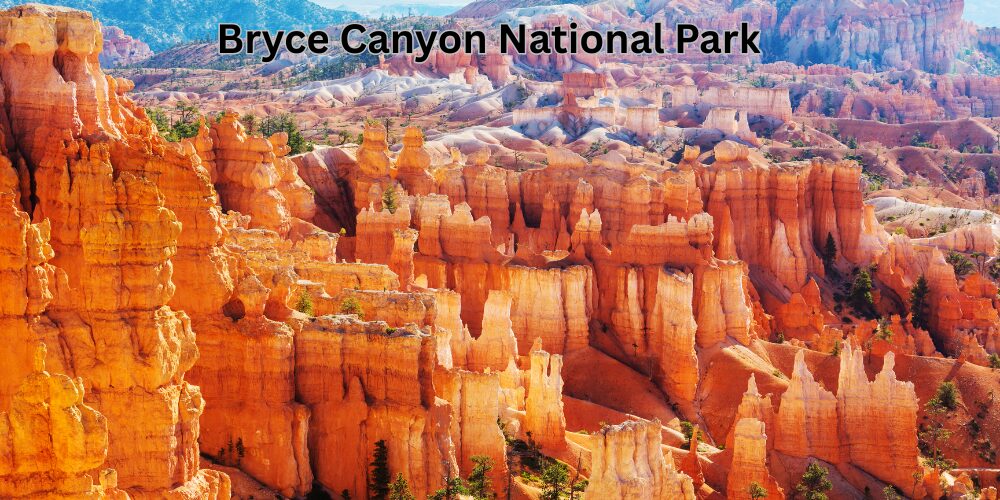
Standing at the rim for the first time, most visitors have the same reaction: awe, followed by a slow shake of the head. It’s like stumbling onto another planet, one sculpted by wind and myth. Bryce’s otherworldly landscape may look alien but it has a warm, intimate pulse that draws people deep into its labyrinthine heart.
A Landscape Shaped by Ice and Fire
Unlike the vast canyons gouged by roaring rivers, Bryce Canyon National Park was sculpted by the quiet, persistent forces of freeze and thaw. Each year, hundreds of freeze-thaw cycles force water into the cracks of the soft sandstone, slowly breaking it apart and giving birth to the park’s iconic features: hoodoos, those tall, spindly rock spires that rise like melted candles from the amphitheater floor. Their colors range from peach to rust to flaming orange. The formations catch the changing light in spectacular ways, especially at sunrise and sunset.
Click here to learn about the incredible Yosemite park.
At Bryce Amphitheater, the park’s main draw, thousands of hoodoos rise in clustered rows—twisting, tipping, and reaching like stone forests petrified mid-growth. From Sunrise Point to Inspiration Point, the view seems to ripple with motion, even though the rocks have stood for millennia.
But Bryce’s beauty isn’t just skin-deep. The elevations range from 8,000 to over 9,100 feet. It’s one of the highest national parks in the U.S. This high perch means cooler temperatures and fresh mountain air. There are sweeping views that stretch for over 100 miles on a clear day. The high altitude also shapes the unique ecology—Ponderosa pines line the rim, while Douglas firs and aspens whisper in the ravines below.
Click here for a 6-Day VIP Tour: Grand Canyon/Zion Canyon/Bryce Canyon/Grand Tetons/Yellowstone.
Exploring the Hoodoo Heartland
While many visitors admire Bryce from the scenic rim, the real magic begins when you descend into the amphitheater. The trails that weave through the hoodoos are like stepping into a dream.
The Navajo Loop Trail is Bryce’s most iconic hike. Beginning at Sunset Point, it descends rapidly via a series of tight switchbacks into Wall Street, a towering slot canyon of vertical cliffs and skyscraper-high hoodoos. As the trail flattens out, you find yourself in a quiet world of red walls and shadowed corridors. Every corner feels like a secret waiting to be discovered. The loop climbs back up past famous formations like Thor’s Hammer—a rock column topped with an enormous stone block that seems to defy gravity.

For those looking to extend their journey, the Navajo Loop connects with the Queen’s Garden Trail, which winds through clusters of stone spires so delicate they resemble coral. The trail ends at Sunrise Point, forming a 3-mile loop that’s considered one of the best short hikes in any U.S. national park.
More ambitious hikers can explore the Fairyland Loop, an 8-mile trek that escapes the crowds and ventures into the park’s northern reaches. Here, the hoodoos feel more raw, more untouched, and the solitude is profound. You might pass a mule deer grazing in the early morning light, or spot an eagle soaring above the rim as your boots crunch through red dust and time.
Click here for a Yellowstone, Grand Teton & Utah Mighty 5 Winter Tour: Small Group 9-Day Tour.
Sunrise, Sunset, and Stars
The best moments in Bryce are defined by light. At sunrise, the amphitheaters blaze with color as the first rays of sun ignite the tops of the hoodoos, casting long, dramatic shadows across the spires. Sunrise Point is aptly named for this daily performance, drawing photographers and early risers eager to witness the stone forest come alive.
Sunset is equally enchanting. At Bryce Point, the golden hour bathes the entire amphitheater in amber hues, the sky melting into purples and pinks as night descends. There’s a hushed reverence among the onlookers—as if everyone collectively realizes they’re witnessing something ancient, almost sacred.
Then comes the stars.
Because of its high elevation, dry air, and lack of light pollution, Bryce Canyon is one of the best places in the United States for stargazing. On a moonless night, the Milky Way stretches from rim to rim, a luminous river across a sea of black. Park rangers offer astronomy programs with telescopes and laser pointers, guiding your gaze through constellations and nebulae. But even without equipment, lying on your back under the stars at Bryce feels like connecting with the cosmos in a way that’s impossible in the city.
Click here for the Utah Mighty 5 National Parks: Small Group 5-Day Tour.
A Park for All Seasons
While most visitors come between May and October, Bryce is a four-season wonder. Spring brings wildflowers to the meadows and melting snow reveals vibrant layers in the rock. Summer offers warm days and cool nights, with thunderstorms occasionally rolling in for dramatic sky shows.
But winter is when Bryce becomes utterly magical. Snow dusts the hoodoos, outlining every crevice and curve in delicate white. The contrast between the red rock and fresh snow is breathtaking—like a scene from a fantasy film. Trails are open year-round (weather permitting), and snowshoeing through the amphitheater offers a silent, sublime experience.
Click here for a great selection of stylish, practical and outdoor appropriate menswear.
History and Spirit
Long before it was a national park, this land was home to the Paiute people. A native American group who told stories of the hoodoos as “legend people” turned to stone by the trickster god Coyote. According to their oral traditions, the formations were once beings who lived badly and were punished—forever frozen in place.
The park was named after Ebenezer Bryce, a Mormon settler who built a road into the canyon in the 1870s. He famously referred to it as “a hell of a place to lose a cow.” Today, the name still sticks, even if his utilitarian view contrasts sharply with the spiritual awe the canyon inspires in most visitors.
Click here for a 3 Nights Zion Glamping Adventure.
A Place to Be Humbled
Bryce Canyon is not the largest national park, nor the most visited. But it leaves an imprint on the soul that belies its size. It’s a place where rock turns to sculpture and silence becomes a companion. Where the stars speak in ancient light. Every step through its maze of stone is a step into deep time—where geology, legend, and beauty converge.
Whether you’re peering into the amphitheater for the first time or hiking among the hoodoos at dawn, one thing is certain: Bryce Canyon National Park doesn’t just show you beauty—it transforms the way you see the world.